The Whole-Brain Child – Nurturing the Developing Brain with Presence & Connection
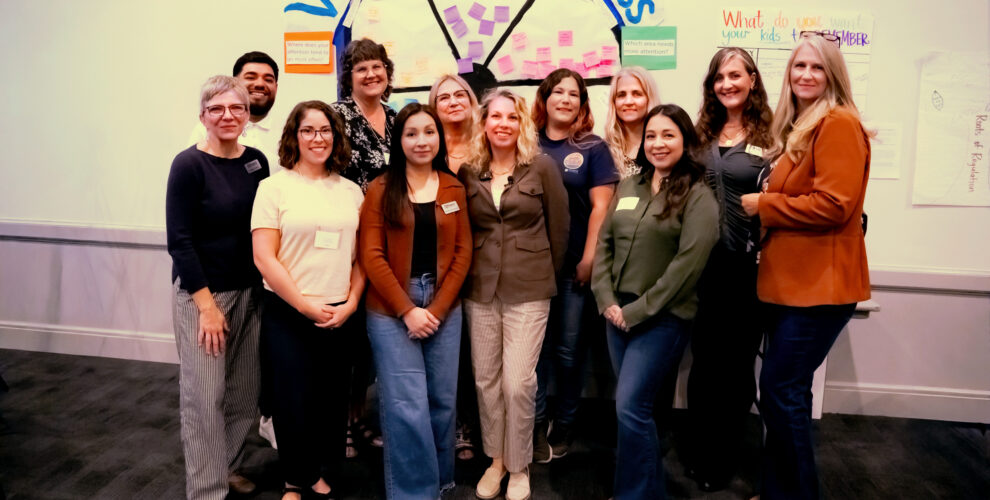
A recap of First 5 Mendocino’s State of the Child Summit with Dr. Tina Payne Bryson
First 5 Mendocino welcomed Dr. Tina Payne Bryson back to Mendocino County for our Children’s Mental Health Summit on September 23. Dr. Bryson is a child and adolescent psychotherapist, parenting educator, and co-author of multiple best-sellers, including The Whole-Brain Child. Drawing from neuroscience and child development, as well as her own lived experience as a mom to three boys, Dr. Bryson shared practical ways adults can nurture children’s developing brain with our presence and connection.
One of the most powerful and unique aspects of her inspiring presentation was the personal touch she brought with her own stories of raising kids and learning from the everyday challenges of parenthood. She emphasized that challenging behaviors are often rooted in a developing brain rather than intentional defiance. By understanding how a child’s developing brain is wired, parents, caregivers, and educators can respond in ways that encourage growth, connection, and emotional regulation. Another central message was the importance of adults strengthening their own “wheel of awareness” so they can show up in their work with our children and youth in a whole-brain way.
One participant reflected on the impact of Dr. Bryson’s presentation, “Dr. Tina Bryson is one of the most amazing teachers and presenters on the brain, in a way that is understandable and easy to put into practice in real life! The information she shared was digestible and communicated clearly.”
The Strategies Behind The Whole-Brain Child
In The Whole-Brain Child, Dr. Dan Siegel and Dr. Tina Bryson explain that healthy development comes from integration, helping different parts of the brain work together effectively. When children become overwhelmed by emotions, their “thinking brain” can temporarily go offline, making reasoning, problem-solving, and self-control difficult. Adults can help children reconnect these parts of the brain through their presence, supportive interactions and intentional strategies.
Rather than focusing solely on correcting behavior, the whole-brain approach encourages adults to view difficult moments as opportunities to teach and build emotional intelligence, resilience, empathy, and strong relationships.
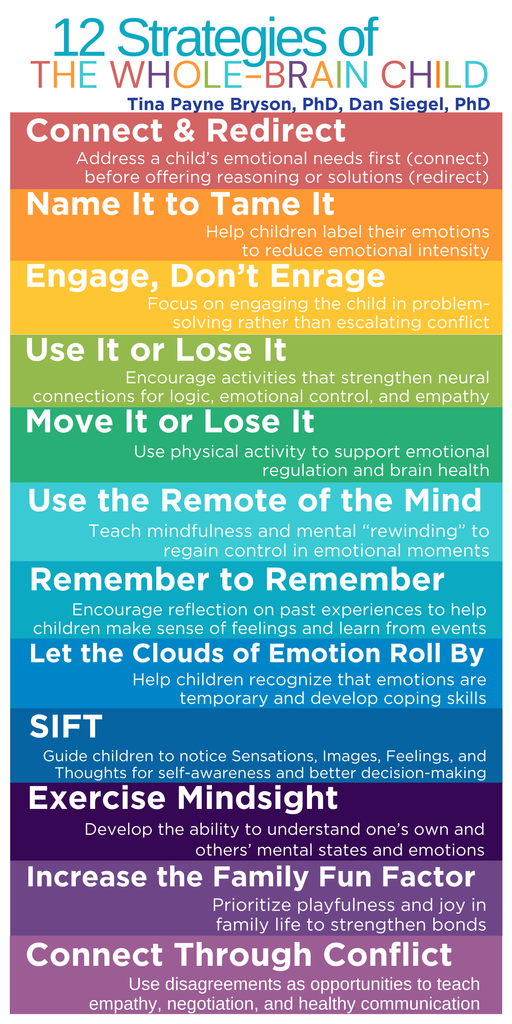
The 12 Strategies of the Whole-Brain Child
1. Connect and Redirect
When children are upset, connection comes before correction. First acknowledge and empathize with their feelings, then help them think through solutions or next steps once they are calm and receptive.
2. Name It to Tame It
When children can identify what they are experiencing, they gain greater awareness and self-regulation, which can reduce the intensity of overwhelming feelings.
3. Engage, Don’t Enrage
Rather than escalating conflict, invite children into connection and co-regulation, then they will be more ready for problem-solving and reflection.
4. Use It or Lose It
Provide opportunities for children to practice skills such as decision-making, empathy, emotional regulation, and problem-solving.
5. Move It or Lose It
Physical activity can help reset the brain and body, reducing stress, regulating emotions, and restoring balance after difficult moments.
6. Use the Remote of the Mind
Teach children that they can direct their attention and revisit experiences in a way that feels manageable. This strategy helps them gain a sense of control over difficult memories or emotions.
7. Remember to Remember
Encourage children to make sense of their experiences by reflecting on the past. Revisiting events in a supportive environment helps them process emotions and build understanding.
8. Let the Clouds of Emotion Roll By
Help children recognize that emotions are temporary. Feelings come and go, and children can learn to experience emotions without becoming overwhelmed by them.
9. SIFT
Guide children in noticing their: Sensations, Images, Feelings, and Thoughts. This practice builds self-awareness and helps children understand what’s happening inside themselves.
10. Exercise Mindsight
“Mindsight” is the ability to understand our own thoughts and feelings, as well as those of others. Developing this skill strengthens empathy, relationships, and emotional intelligence.
11. Increase the Family Fun Factor
Play, laughter, and positive shared experiences strengthen relationships and create meaningful opportunities for connection. Fun is not just enjoyable; it supports healthy development.
12. Connect Through Conflict
Conflicts can become opportunities for learning. When adults guide children through disagreements with empathy and respect, children develop communication skills, perspective-taking, and resilience.
Why These Strategies Matter
Children today face increasing social, emotional, and environmental challenges. Dr. Bryson reminds us that strong relationships and supportive responses from caring adults can have a lasting impact on children’s brain development and mental health. By helping children understand their emotions, solve problems, build empathy, and have support during challenges, we help teach them skills that will serve them throughout their lives.
One of the professionals in attendance was in awe of how complicated neuroscience was made so accessible. “Dr. Bryson is a genius at making the brain understandable and something that can work on our behalf. She’s so clear and knowledgeable, taking complex concepts and making them easy to understand.”
The Personal Touch
Dr. Bryson’s emphasized throughout her presentation that every interaction with a child is an opportunity to build connection and strengthen development. Children do not need perfect adults in their lives; they need caring adults who are present and willing to connect, repair, and guide them through life’s challenges.
As our community continues to prioritize children’s mental health, the principles of The Whole-Brain Child offer practical tools for nurturing resilient, compassionate, and emotionally healthy children who can thrive at home, in school, and in our broader community.
Dr. Bryson has presented at previous State of the Child Summits:
- May 2023 – The Power of Showing Up
- March 2024 – The Power of Showing Up Deep Dive
- March 2025 – The Way of Play
First 5 Mendocino thanks Dr. Tina Payne Bryson for sharing her expertise and helping our community better understand how we can support the healthy brain development and well-being of children.